Our services
CNC Milling Services in Penang, Malaysia
K-TOOL Engineering CNC mills small, intricate components in high-performance engineering plastics and metals: precision plates, insulators, housings, jigs and fixtures held to ±0.01 mm. Trusted by test, connector and semiconductor manufacturers in Penang, Malaysia and worldwide.
Overview
Precision CNC milling, small and intricate
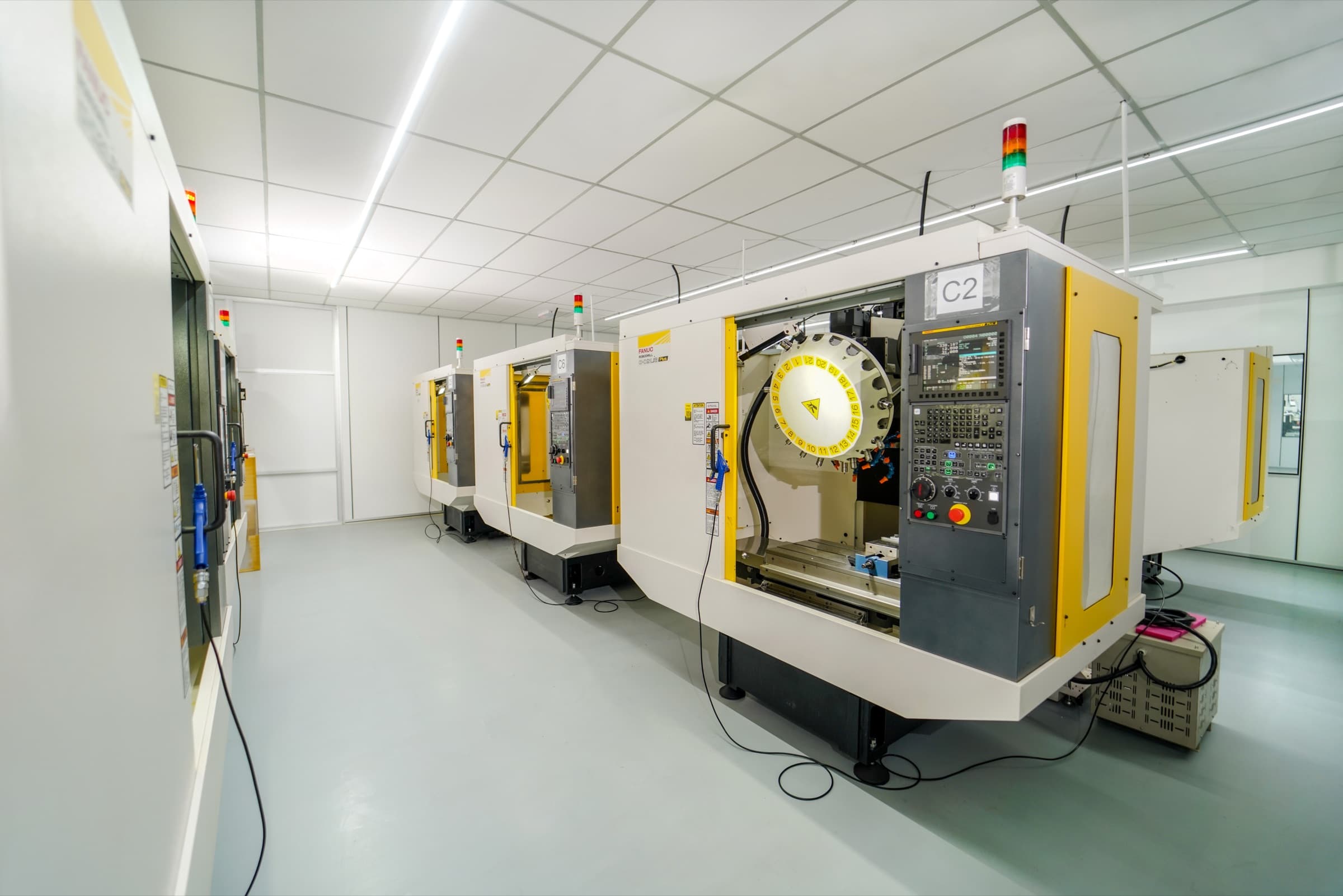
CNC milling uses a rotating cutting tool, driven along multiple axes by computer control, to cut a part from solid stock. It is the most versatile way to produce three-dimensional components with repeatable accuracy: pockets, bores, slots, threads and contoured faces, all in a small number of setups.
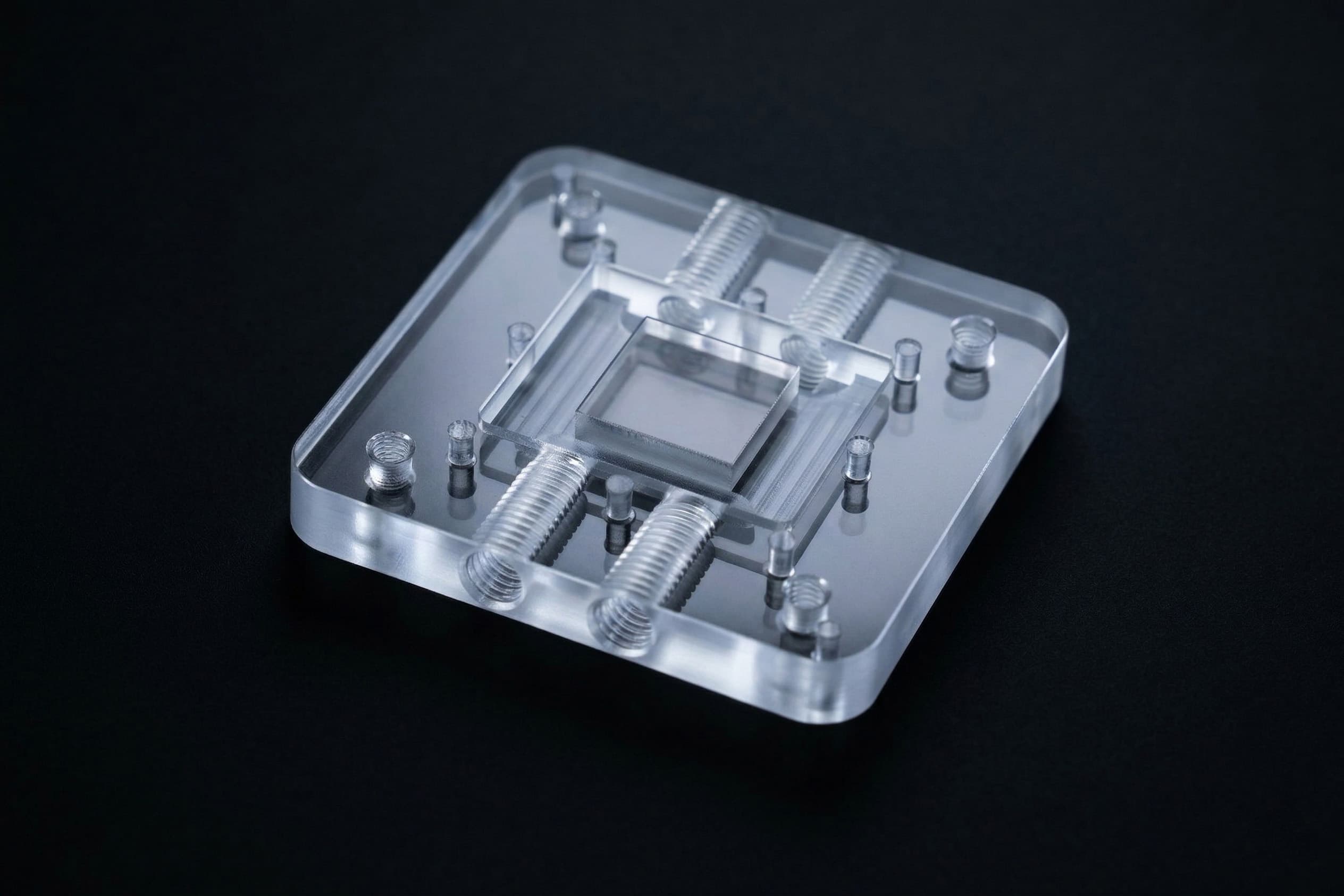
Our work sits at the small, detailed end of that range. Rather than large structural parts, we machine the intricate components that go inside test interfaces and connector assemblies, most often from engineering plastics that are far less forgiving than metal.
What decides whether a part like this comes out right is rarely the machine — it is how the job is set up. We design and cut our own jigs and fixtures so a delicate part is located repeatably and held without being clamped out of shape. We rough, let the material relax, then take a finishing cut, because stress-relieved stock moves after the first pass. Cutters are matched to the material rather than to speed, related features are cut in one setup, and parts are measured after they have settled. That is what thirty years on these parts has taught us. See our machining equipment and inspection process.
Capabilities
CNC milling capabilities & specifications
What we hold day to day on production parts. Every job is reviewed against your drawing and tolerance stack before we quote.
Tolerances
±0.01 mm (10 μm) held routinely on production parts, with every job checked against your drawing before it ships.
Part types
Precision plates and blocks, insulators and dielectric parts, housings and covers, jigs and fixtures, pins, bushings and spacers.
Materials
High-performance engineering plastics such as PEEK, Torlon®, Vespel® and ULTEM™, plus aluminium, brass, steel and more.
Part profile
Small, intricate work rather than large structural parts: thin walls, fine features and tight internal detail.
Finishing
Deburring and edge condition are handled in-process, not as an afterthought. Anodising, plating, coating and other applied finishes come through certified finishing suppliers.
Process know-how
Workholding, tool selection and feeds tuned per material. The difficult part is rarely the machine; it is holding a delicate part without marking or distorting it.
Materials
Machining high-performance engineering plastics
These materials are chosen for heat resistance, dimensional stability, dielectric or static-dissipative properties, or low outgassing — and every one of those properties makes them harder to machine than metal. Working them to tolerance is a specialism in its own right.
Engineering plastics
- PEEK
- Torlon®
- Vespel®
- ULTEM™
- Delrin®
- Semitron®
- Clear polycarbonate
- ESD polycarbonate
- Glass-filled polycarbonate
- Teflon® (PTFE)
- Rexolite®
- C-STOCK AK / AK-500
- and more
Metals & alloys
- Aluminium
- Brass
- Steel
- and more
Working in a material that is not listed here? Send us the specification with your drawing and we will tell you honestly whether we are the right shop for it.
Industries
Industries we serve
Test & connector
Insulators and dielectric parts, precision plates, housings and covers, interface and cable-routing components, and the fixtures that hold them — the heart of our CNC milling work.
Semiconductor & electronics
Precision jigs, insulators and handling components for chip makers and electronics manufacturers.
Industrial & instrumentation
Wear parts, insulating components and small assemblies in chemically resistant plastics.
Medical
Small components in biocompatible engineering plastics with full traceability.
Related
Explore more of K-TOOL
What tolerances can your CNC milling achieve?
We routinely hold ±0.01 mm (10 μm) on production parts. Tighter requirements are reviewed against your drawing before we quote. On small parts in engineering plastics, what decides whether a tolerance is achievable is usually the material and the geometry rather than the machine, so send the drawing and we will tell you straight.
Which materials do you CNC mill?
High-performance engineering plastics are a core specialism: PEEK, Torlon®, Vespel®, ULTEM™, Delrin®, Semitron®, ESD and glass-filled polycarbonate, Teflon® (PTFE), Rexolite® and C-STOCK. We also mill aluminium, brass, steel and more.
Can you machine small, intricate parts?
Yes. That is our focus. We specialise in small, detailed components such as precision plates, insulators, housings, jigs and fixtures, pins and bushings, rather than large structural work. Thin walls, fine features and tight internal detail are routine for us.
Do you machine parts for the test and connector industry?
Yes. Test and connector work is a core part of our CNC milling: insulators and dielectric parts, precision plates, housings and covers, interface and cable-routing components, and the jigs and fixtures used to build and check them.
Why is machining engineering plastics like Torlon and Vespel difficult?
These materials move, and they are hard on tooling. They are sensitive to heat and clamping pressure, they can chip or burr where metals would cut cleanly, and some absorb moisture and change dimension. Filled grades are abrasive and wear cutters fast, so a tool that is still cutting may already be leaving a burr or drifting out of tolerance — edges get replaced before that point, not after. Holding tolerance in them depends on workholding, tool geometry and cutting strategy tuned to the material. That is experience, not machine specification.
Can you supply parts already anodised, plated or coated?
Yes. Machining is done in-house and applied finishes are handled through certified finishing suppliers we work with regularly, covering anodising, plating, coating and more. You receive the part finished and ready to use instead of coordinating a second supplier yourself.
Is there a minimum order quantity?
No. We handle one-off prototypes and single replacement parts as readily as repeatable production batches.